
Can a man be good without believing in or worshiping God? Yes. Of course. There are many atheists who are better moral people than some theists. But that is not the issue. It is much deeper and more profound.”Can a man be good without God?” is the question to ask, not “Can we be good without believing in God?”
We need a rich moral soil for any true objective morality. And a rich moral soil cannot exist unless you have a moral gardener to plant it in there in the first place. This is beyond mere belief.
One of my dear atheist colleagues points out to me that recent studies in biology have established that much of what we think is moral is rooted in our biological history. Thus we have no need of an objective moral judge, God. Really?
Consider, even if it can be established that there is biological link to morality that does not imply moral obligation. In other words, it does not make us morally obligated to follow what we are biologically inclined to.
Some are born with a propensity to be more susceptible to alcohol than others. Does that then make it obligatory for them to get drunk? Of course not. In fact it makes it morally obligatory for them to watch themselves more so, especially when they are about to drive. Some are born with a more susceptibility to violence than others. Does that make it “OK” for them to be violent to others? The same thing applies to sexual preferences or any other disposition. All these require an independent moral standard to gauge them.
The Apostle Paul, in the New Testament book of Romans talked about us all being innately born with a Moral Compass if you will. He called it the law that is “written on the heart”
He wrote:
14 For when Gentiles, who do not have the law, by nature do what the law requires, they are a law to themselves, even though they do not have the law. 15 They show that the work of the law is written on their hearts, while their conscience also bears witness, and their conflicting thoughts accuse or even excuse them
Source: Romans 1: 12-15.
This is called in ethical theory the Moral Law or Natural Law tradition that supports that thesis.
Thomas Aquinas, Thomas Hobbes, John Locke, United States Declaration of Independence and the Constitution of the United States, as well as in the Declaration of the Rights of Man and of the Citizen all presuppose Natural Law.
So can a man be good without believing in God? Yes.
But can a man be good without God? And the answer to that is no. No because when you eliminate the standard of Goodness itself, you eliminate objective goodness too.
See this brilliant video on the issue.
Consider, when we have two societies or very intelligent people who disagree on an ethical course of action, we would need an independent or objective standard (that is outside of human opinions or passions) to determine which one of them is in fact right. If we do not have that independent standard, then we are stuck with good and evil being arbitrary at worst or contrived at best.
What do those who disagree have to say? What about Sam Harris and his colleagues who argue that objective morality can exist without an external reference point or judge?
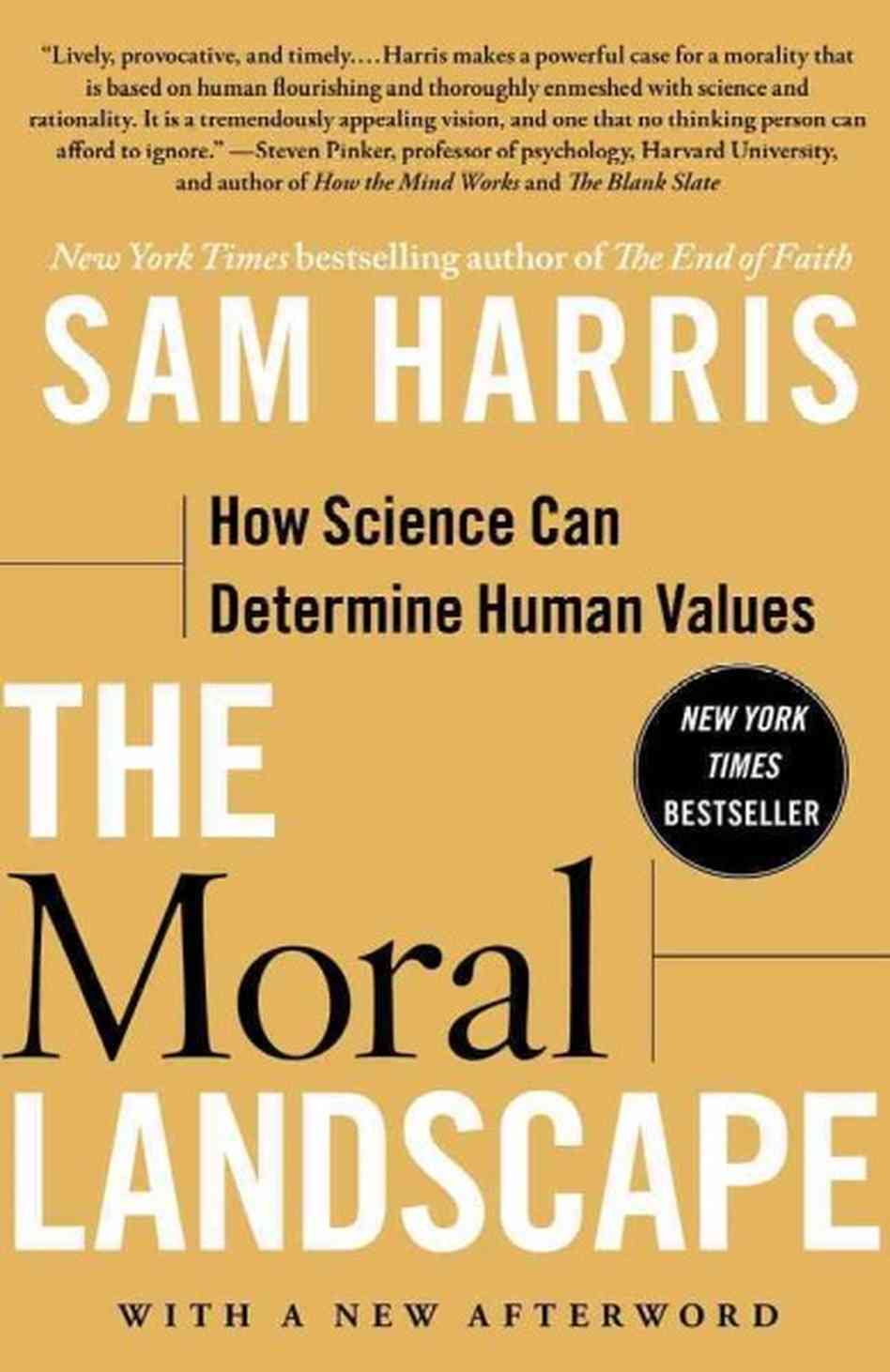 That is the main problem with Sam Harris’s theories–and many others who walked that path–is that they assumes that Human Wellbeing is the highest standard, but he assumes that based his uses rationality or logic (which cannot exist without an objective law that makes them work, see my post on this) .
Harris assumes we can arrive at an ought (what we should do) from an is, (how the world is now), which is a logical fallacy.
Furthermore, and building on this, even if it is possible to arrive at an ought from an is, which Harris claims can be done, it does not obligate me to follow that ought any more than a hammer should not hit a nail or a tiger tear apart a mouse for fun.
There are no moral obligations that come from merely acknowledging a right or a duty. In effect, when we remove the absolute from the discussion, namely God, we will have ethics without any biding force, or in the modern vernacular, ethics without teeth.
A philosopher in his ivory tower who demands us all to be moral and “good” without a higher authority behind his words, is like an old toothless lion that roars at a pack of zebras demanding they become his dinner. He is roaring in a very sophisticated way from his ivory tower, but has no effect in the real world of sex, taxes, war crimes, trafficking, and breaking of the law in the dark.
Objective ethics without God is morality without authority and without obligation — even historically significant atheists agree with this hypothesis:
1. Jean-Paul Sartre : “It [is] very distressing that God does not exist, because all possibility of finding values in a heaven of ideas disappears along with Him.”
2. Friedrich Nietzsche : “There are altogether no moral facts”; indeed, morality “has truth only if God is the truth—it stands or falls with faith in God.”
3. Bertrand Russell : rejected moral realism and retained the depressing view that humanity with all its achievements is nothing “but the outcome of accidental collocations of atoms”; so we must safely build our lives on “the firm foundation of unyielding despair.”
4. J. L. Mackie : “Moral properties constitute so odd a cluster of properties and relations that they are most unlikely to have arisen in the ordinary course of events without an all-powerful god to create them.”
SOURCE : Paul Copan, “Ethics Needs God” in Debating Christian Theism, ed. By Moreland, Meister and Sweis (Oxford University Press, 2013), 86
With God as the foundation, one has all the moral authority and moral obligations he needs.
Good and upright is the LORD; therefore he instructs sinners in his ways. 9 He guides the humble in what is right and teaches them his way. 10 All the ways of the LORD are loving and faithful for those who keep the demands of his covenant.
We just have to make sure we are following the right God.
Furthermore, not everything that is good and right is what we can arrive at with mere rationality alone. GK Chesterton was right, “There must always be a rich moral soil for any great aesthetic growth.” SOURCE: G. K. Chesterton, The Defendant. Second edition. London: R. Brimley Johnson, 1902.
And a rich moral soil cannot exist unless you have a rich moral gardener to plant it in there in the first place.
What do you think?





Leave a Reply to Khaldoun A. Sweis Cancel reply